
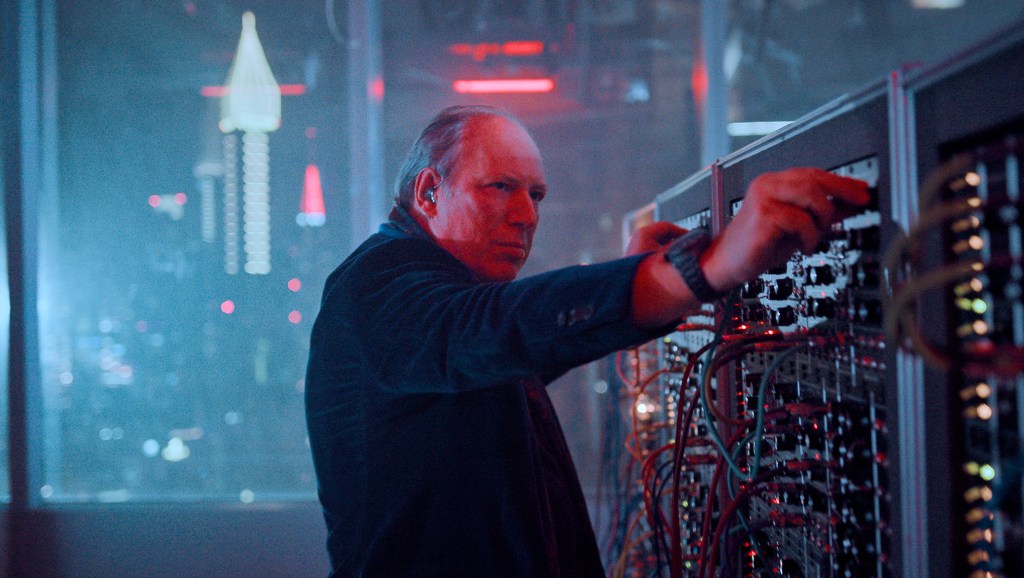
There are not many composers out there who can brag about their extensive film score work, have an adulation of celebrity friends such as Johnny Marr, Pharrell Williams and Denis Villeneuve on speed dial, showcase showmanship to a sellout arena crowd yet celebrate like a rockstar! But that’s Hans Zimmer for you, the award-winning composer behind hits such as Pirates of the Caribbean, Dune, Inception, The Lion King, The Dark Knight, Interstellar and many more. In his brand new concert movie – Diamond in the Desert – we’re witnessing a composer living his best life.
But then again, we are talking about one of the most recognisable and brilliant composers of our generation. Why? Because if John Williams (the GOAT) is the soundtrack to your childhood (thanks to Superman, Star Wars and Indiana Jones), then Hans Zimmer is the soundtrack of your life. As a lifelong fan, there hasn’t been a moment where that statement hasn’t intertwined with the cornerstones of my existence. Feeling adventurous? Drink Up Me Hearties Yo Ho from Pirates of the Caribbean: At World’s End would get me into a swashbuckling mood. If I looked up at the stars and felt the dreamy essence of being a small entity in the big wide universe, Cornfield Chase or Day One from Interstellar are never too far away. And don’t get me started on the excellence that is Dune: Part One and Two, music that instantly transports your soul to the very sands of Arrakis. This is not a solitary observation when even the likes of Zendaya can cite how Interstellar can inspire an entire TikTok generation to remix the score on their videos. Such as its influence, it’s no surprise that the actress ensures her friends have watched the film!
We do this every day with the music we love. We feel the weight of its emotion through every lyric, every beat, every rhyme, right through to its concluding note. Zimmer’s music evokes those same feelings. His sound brings moments and characters to life knowing it can take audiences on a cinematic journey of discovery. It’s big emotions told with the biggest sound, where your eardrums are uplifted by epic motifs where simple words can’t convey. No-one comes close to how much his sound and presence has influenced and changed the soundtracking world, and Hans Zimmer is simply a one-of-a-kind cultural phenomenon.
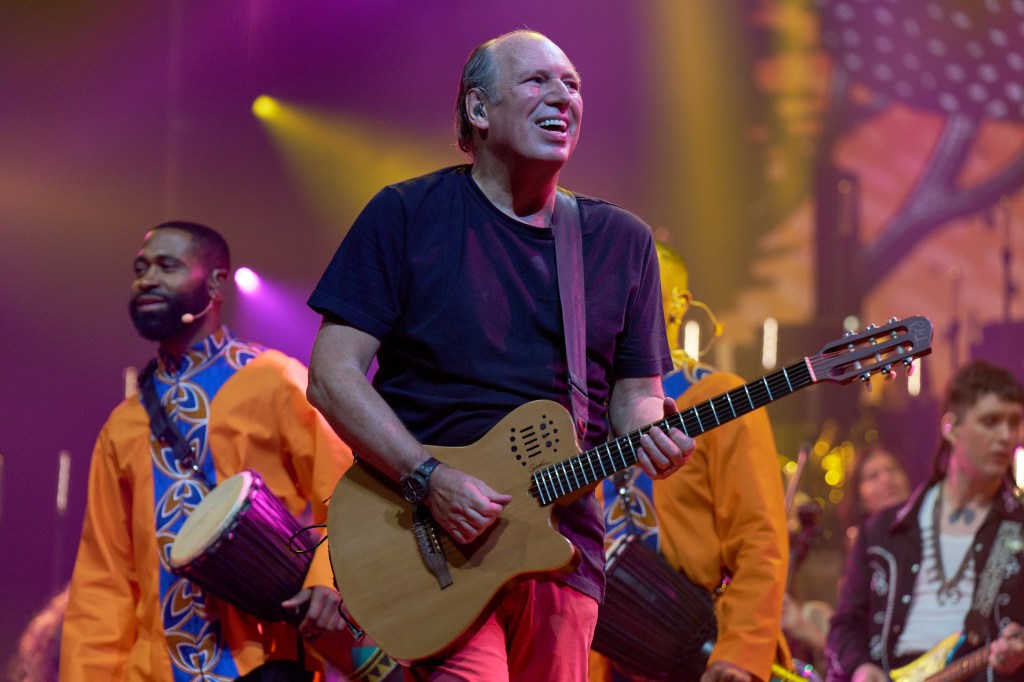
Director Paul Dugdale understood this remit, having the monumental task of translating Zimmer’s audacious soundscape into a cinematic event. You feel it during the opening of What Are You Going to Do When You’re Not Saving the World from Man of Steel. The camera slowly lifts from Zimmer’s fingers on the piano until the maestro is in full frame with every nuance of emotion captured in every key pressed. Slowly but surely, the camera reveals each part of the 18-piece band as if all the jigsaw pieces were coming together until it finally reaches its triumphant key change.
That’s one of many impressive camera and editing techniques Diamond deploys in its visual storytelling. Interspersing concert footage from the Coca-Cola arena alongside filmed movie style-vignettes, Dune – led by vocalist Loire Colter – serves as an epic entrance, filmed on actual sand dunes. Dubai’s lavish skyline as the entry point for The Dark Knight is filmed with the same towering precision as if Sir Christopher Nolan had directed it himself. Inception’s Time is performed on top of the iconic Burj Al Arab whilst the Interstellar suite is other-worldly with its starry lightshow projections at the Al Wasl Plaza. With scale and ambition in motion, Dugdale is willing to go the distance, and in doing so, crafts a magical immersion of Zimmer’s music.
It’s a thankful step up from the composer’s 2017 Live in Prague concert. In recent years, concert movies have seen Talking Heads, Taylor Swift and Beyoncé join this exclusive bandwagon for fans who may have missed out on their tours. Of course, there’s no substitute for not being there live amongst the crowd trenches seeing your favourite artist play, but as Dugdale proves, the non-traditional evolution of the concert movie is seminal here with Zimmer opening the revelatory door with a series of intimate interviews that are segue throughout the movie.
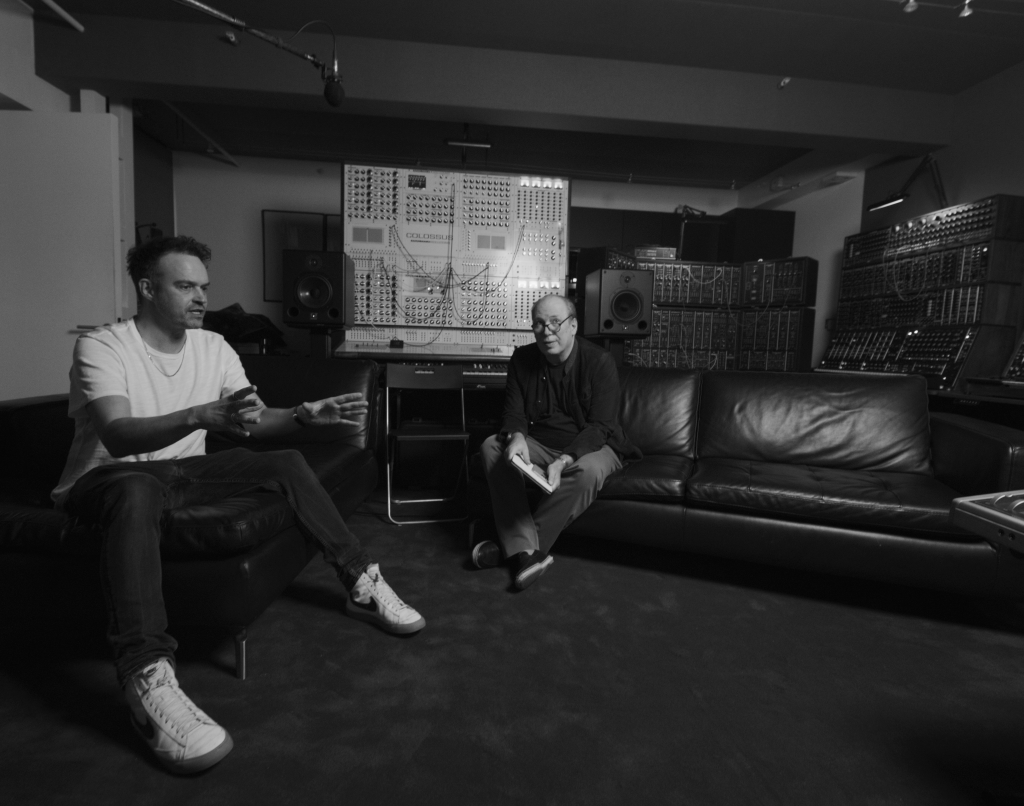
Filmed in black and white and artistically cropped to 4:3, the director is careful not to flood the interviews with tons of backstory. Besides, the musical suites take up significant runtime anyway. But in utilising his previous documentary/concert experiences with Coldplay, Raye and The Rolling Stones, Diamond is kept simple and light, doing just enough to stray away from ‘puff piece’ fodder but asks audiences to go beyond the concert experience to understand what lies at the heart of composing. How has Zimmer’s music become this larger-than-life entity? Why go on tour if he himself didn’t believe he could do it? Why – as the film poses – are we all interested in being storytellers?
Zimmer’s entire MO is built around moving people, a sentiment inferred from Dugdale’s film. Words are not his forte and therefore, his best offer of communication is through his music, soul-searching to find meaning behind those cinematic moments we remember. One casual scene brilliantly highlights Timothée Chalamet’s role on Dune and Gladiator’s To Zuccabar or his obsession with the intense cello chord from Why So Serious? from The Dark Knight (co-composed with James Newton Howard) influenced his performance as Paul Atreides. Humour is not far behind Zimmer’s creative madness with Nolan on hand to tell his frequent musical collaborator “that’s enough” after 48 recording sessions for Interstellar. By the time the film reaches its apex with The Lion King (with singer Lebo M on hand to lead the vocal charge), we reach the revelation that the score was a requiem for Zimmer’s own father passing at the age of six. Zimmer doesn’t shy away from vulnerability, performing to an imaginary friend named “Doris”, who is his emotional anchor, but is genuinely taken aback by how much those compliments fly in his direction.
It’s the type of insight that film fanatics would find appreciative about the creative process, a messaging that’s somewhat of a rarity these days like how DVD commentaries used to plug that craft gap between filmmaker and audience. Those days feel non-existent and yet, Dugdale inadvertently recaptures that same informative spirit, even if some of the tidbits will be familiar to those who have seen Zimmer in concert before. The composer is no stranger to sharing these stories in between his setlist to an enthusiastic crowd. Yet, this not only acts as a celebration of Zimmer’s accomplishments but also to the collaborations that have made him who he is. The stories behind the songs matter. The process of worldbuilding songs matters. The highs and lows matter, and those honest conversations are some of the best moments Dugdale extrapolates.
But it’s on stage where the magic happens and Zimmer is in his happy place, possessing all the big kid energy of fun and glee as someone who enjoys playing in the sandpit thinking what musical toy he can experiment with. Switching from piano to his guitar (aka his weapon of mass destruction he describes), he orbits around the electrifying Tina Guo (cello), Guthrie Govan (guitar) and Lisa Gerrard (vocalist on Gladiator) with smiles, almost cheering them on as the spotlight shines on them. While not every song from his catalogue gets the big screen treatment, the money shot is in those grandiose concert performances, playing his greatest hits suites where you feel those Dolby Atmos speakers pushed to their limits. It almost doesn’t matter if some moments feel over the top or goofy by extent. This is Zimmer at his finest hour, doing what he does best: entertaining.
Filled with beauty, love and wall to wall sound, this is an exhilarating piece of filmmaking to celebrate a legendary composer, and for 2 hours and 38 minutes, you’re spellbound by its musical brilliance.



Don’t Be Shy – Leave a Reply